


What Makes an All-Inclusive Wedding Venue Worth It?
Planning a wedding sounds simple until you start listing everything that needs to happen. You need a space, food, drinks, staff, rentals, timing, and someone to keep it all moving. Each piece connects to another, and once you start reaching out to vendors, you realize how quickly the details multiply.
The venue decision is not just about where the ceremony or reception will take place. It determines how the event will be managed from start to finish. Some venues only provide the space. Others handle catering, service, setup, and coordination under one roof. That difference changes how much work falls on you.
If you are comparing options and trying to decide whether an all inclusive wedding venue is worth it, this guide will break it down clearly. We will explain what it usually includes, where couples lose time and money with traditional venue rentals, and how to evaluate your options before signing a contract.
What an All-Inclusive Wedding Venue Actually Means
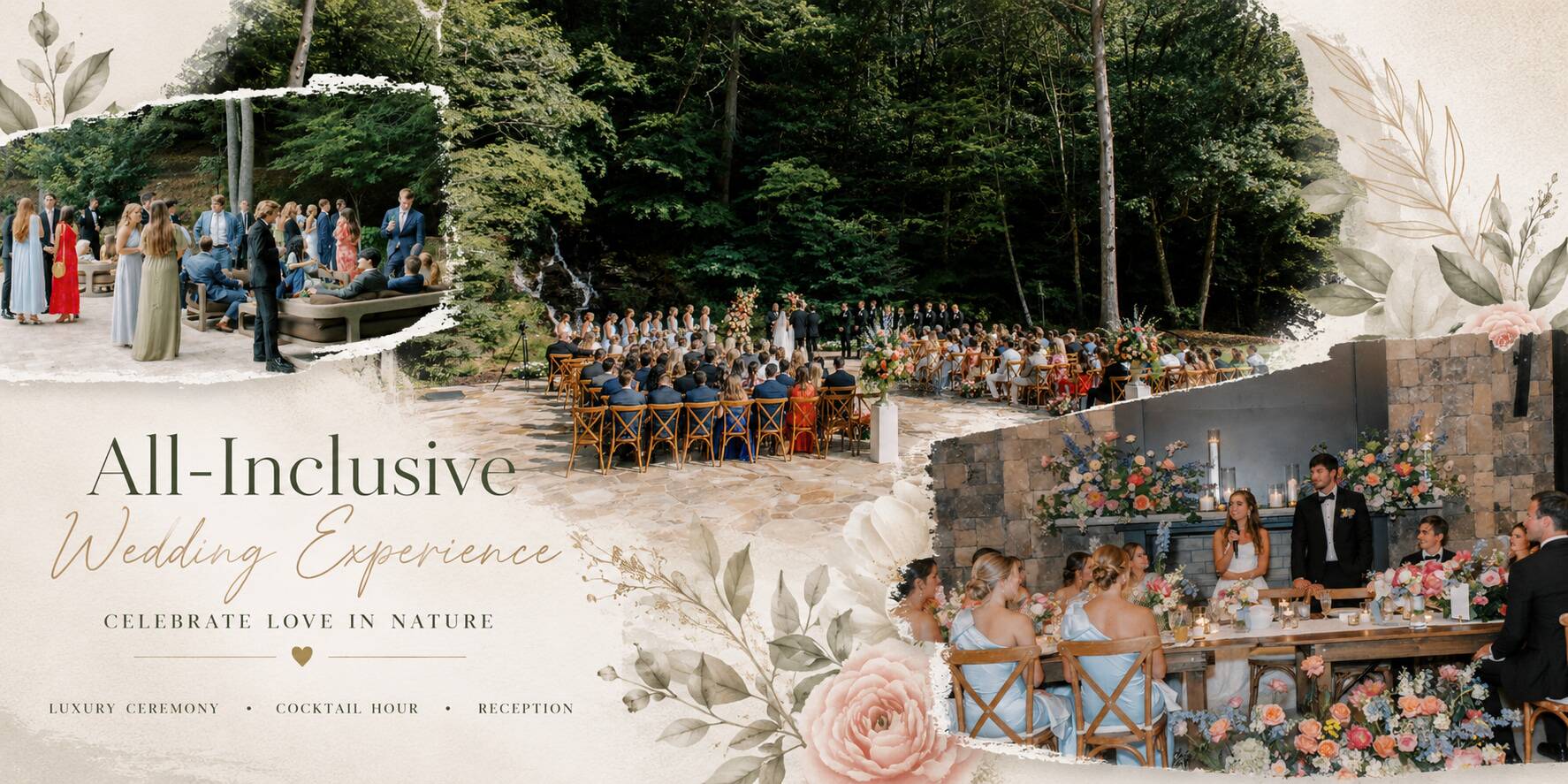
An all-inclusive wedding venue bundles the core services needed to run a wedding into one contract. That typically covers the event space, in house catering, bar service, staffing, tables, linens, and coordination. What stays separate is usually photography, florals, entertainment, and personal styling.
Here at The Falls at Blue Ridge in Ellijay, Georgia is exactly what that looks like in practice:
- An in-house culinary team that builds gourmet menus tailored to each couple, not a generic outside caterer
- Full bar service through the Conservatory Bar, covering artisanal cocktails, top-shelf spirits, and an extensive wine list
- 100 acres in the Blue Ridge Mountains with multiple event spaces, all under one coordinated team
- One contract covering the core of your event from start to finish
That is the core difference. You are not just renting a space. You are booking a full operation.
Where Couples Lose Time and Money With Traditional Venues
Traditional venue rentals look affordable upfront. The base rental fee appears manageable, and it feels like a flexible option. In practice, the costs pile up fast.
Outside catering means sourcing tables, chairs, linens, glassware, and service equipment separately. Each one is a different vendor, a different contract, and a different thing that can go wrong on the day.
Coordination is the bigger problem. When the caterer, rental company, and venue team have never worked together, the couple ends up as the person connecting all of them. Setup times overlap, timelines slip, and someone always ends up solving a logistics problem on the wedding day that should have been sorted weeks earlier.
Then come the costs nobody mentioned at the start: service charges, overtime fees, gratuities, and security requirements. By the time the event is over, the final number looks very different from the original rental quote.
Benefits of an All-Inclusive Wedding Venue
Cost clarity from day one. When catering, bar service, staffing, and core logistics are included in one proposal, you know what you are working with from the beginning. No surprise invoices two weeks out.
One team manages everything. Instead of chasing multiple vendors, you work with one coordinated team. At The Falls at Blue Ridge, a dedicated on site coordinator manages the entire day. You are not hoping everyone shows up on time because one person owns the timeline.
Spaces that work together. The Falls gives you four distinct spaces within one property, each built for a different part of the wedding experience:
- The Ballroom fits up to 255 guests with floor-to-ceiling glass retractable doors, a grand fireplace, customizable lighting, and direct views of the Majestic Waterfall
- The Conservatory is a glass-enclosed room with panoramic Blue Ridge Mountain views, a full-service bar, and capacity for up to 75 guests, ideal for rehearsal dinners and bridal showers
- The Courtyard is an outdoor space for up to 300 guests with the Majestic Waterfall as the natural backdrop
- The Pavilion handles up to 100 guests and includes a wood-burning pizza oven, outdoor kitchen, and Chef’s Argentinian grill, perfect for welcome events or outdoor receptions
With multiple indoor reception venue options across the same property, the weather is never a crisis. At The Falls, there is always a covered alternative without any last-minute scrambling.. Stay on the property the night before or after. No coordinating transport, no rushing the morning of the wedding.
The Falls runs a farm-to-table restaurant on the same property. The culinary team works the kitchen daily, they know the space, and past guests consistently call the food one of the best parts of the entire experience.
What to Ask Before You Book Any All-Inclusive Venue
The term all inclusive gets used loosely. Before signing anything, ask these questions directly:
- What is specifically included in the package price?
- Is catering prepared in-house or brought in from outside?
- Is bar service run by the venue team or a third party?
- What are the guest capacity options across different spaces?
- Are there indoor reception venue options if the weather changes?
- What rentals are included, and what costs extra?
- Is there an on-site coordinator, and what is their involvement on the day?
- Are there restrictions on outside vendors?
- What are the overtime and service charge policies?
A good all-inclusive wedding venue will have clean answers to every single one of these. If the answers are vague, that is worth paying attention to.
Is an All Inclusive Venue a Good Fit for You?
An all-inclusive venue usually works well when you do not want your wedding planning to turn into constant coordination.
If you are balancing work, travel, or other commitments, managing multiple vendors can quickly become draining. Every caterer, rental company, and bar service comes with its own contract, timeline, and communication. When one team handles most of those pieces, the process becomes easier to manage. It also helps if you prefer having a clearer idea of your total cost from the beginning. When catering, staffing, and core rentals are bundled together, you are not constantly adjusting your budget as new invoices appear.
At the same time, some couples enjoy building their event from the ground up. If you already have specific vendors you want to work with or prefer to oversee every detail yourself, a traditional venue rental might suit you better.
In the end, it comes down to how involved you want to be in the coordination. Some people want to manage every moving part. Others would rather hand that responsibility to one experienced team.
Conclusion
Choosing between traditional wedding reception venues and an all-inclusive wedding venue is a question of how you want the planning process to feel and how you want the day to run. For couples who want cost clarity, one coordinated team, and a setting where the core details are handled under one plan, the all-inclusive model is genuinely worth it.
At The Falls at Blue Ridge, in-house catering, bar service, four distinct event spaces, on-site accommodations, and 100 acres of the Blue Ridge Mountains all come together in a way that takes the complexity out of wedding planning without taking anything away from the quality of the day.
Schedule a tour, ask the right questions, and see whether it fits what you need. Reach out to us, and we will walk you through everything.
Customer Reviews

Autumn at The Falls: Fall Weddings, Dining & Mountain Experiences in Blue Ridge
Overview: Autumn scenery → Fall weddings → Seasonal dining → Mountain experiences Enjoy colorful fall scenery,
Briana & Braxton’s Misty Mountain Wedding at The Falls at Blue Ridge
Some wedding days begin with sunshine. Briana and Braxton's began with fog, thick, calm
Megan and Hunter’s Waterfall Wedding at The Falls at Blue Ridge
The morning started quietly. At the cabin, Megan was surrounded by her bridesmaids, getting ready,